Cognitive Architecture: Designing for How We Respond to the Built Environment
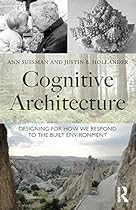
| Author | : | |
| Rating | : | 4.34 (704 Votes) |
| Asin | : | 0415724694 |
| Format Type | : | paperback |
| Number of Pages | : | 212 Pages |
| Publish Date | : | 2014-04-25 |
| Language | : | English |

DESCRIPTION:
The book takes an inside-out approach to design, arguing that the more we understand human behavior, the better we can design for it. Six exercises and additional case studies suggest particular topics - from the significance of face-processing in the human brain to our fascination with fractals - for further study.. The text suggests new ways to analyze current designs before they are built, allowing the designer to anticipate a user's future experience. *Winner of the Environmental Design Research Association 2016 Place Research Award!*In Cognitive Architecture, the authors review new findings in psychology and neuroscience to help architects and planners better understand their clients as the sophisticated mammals they are, arriving in the world with built-in responses to the environment that have evolved over millennia.The book outlines four main principles---Edges Matter, the fact people are a thigmotactic or a 'wall-hugging' species; Patterns Matter, how we are visually-oriented; Shapes Carry Weight, how our preference for bilateral symmetrical forms is biologic
pricey It is a good book, but absurdly overpriced.I was expecting to get much more NEW insights.For an actual 175 black and white pages, this paperback for $53.03 (plus freight) doesn't worth your money.If you don't care about the price tag, go for it.For me, the fair price, considering equivalent good books, it not more than $15. In other words, it is asking more than three times its value.. William Neher said A New Way To Look At The Built Environment. A great book that will challenge the way to look at the built environment. A must read for every architect and designer.. "although I appreciated their mundane-ness as good design is not necessarily loud" according to Marina. This was an interesting read, but I am not sure it was worth what I paid for it. Many of the ideas have been discussed for a long time. The case studies seemed to be selected at random, although I appreciated their mundane-ness as good design is not necessarily loud. For a short black and white book with ideas that are fairly familiar, I would not pay more than $20.
In this regard, the book can also add an additional layer of depth and context to other social disciplines that evaluate the cognitively based relationships between people and their environments, including environmental psychology, place attachment, and even tourism.' - Courtney Grunninger Bonney, Clemson University. How Evolution Shapes Our Loves and Fears")'As most apparent in the student exercises at the end of each chapter, this slender volume is didactic; those desiring a greater awarene
With Justin Hollander, she created the Open Neighborhood Project, using art, craft and technological tools to increase public participation in planning, and earning the Commonwealth's "Gold Star Award" in 2010. Justin Hollander, PhD, AICP is an Associate Professor in the Department of Urban and Environmental Policy and Planning at Tuft